

When it comes to brakes, trust your feelings! You know how brakes feel when they’re working properly: You press the pedal, and it feels firm. If the brake pedal goes to the floor or becomes spongy, it simply doesn’t feel right. When something is as important as your brakes, don’t ignore your feelings. Bring your vehicle to Jiffy Lube® for a brake inspection and maintenance right away.
In this blog, we’ll go over how brakes work, what happens when your brake pedal travels to the floor, and what may cause this to happen.
How Brakes Work
Understanding how your vehicle's brake system operates can help you maintain it effectively and respond quickly when something feels off.
When you press the brake pedal, it creates a mechanical force that’s transmitted to the brake booster. The brake booster amplifies this force, sending it to the master cylinder. The master cylinder then converts the mechanical force into hydraulic pressure.
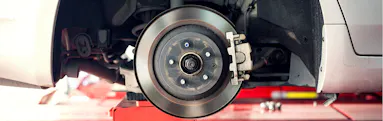
This hydraulic pressure travels through the brake fluid within the brake lines and hoses to reach the wheels. If your vehicle has disc brakes—common in most vehicles—the pressure causes caliper pistons to press the brake pads against the brake rotor. For vehicles with drum brakes, the hydraulic pressure pushes wheel cylinders to press the brake shoes against the drum.
The pressure applied to the disc or drum brakes generates friction, which slows or stops your vehicle. Now that we’ve covered the basics, we can concentrate on your questions.
What Happens When Your Brake Pedal Goes to the Floor?
If your brake pedal suddenly sinks to the floor, it’s a scary moment—no question about it. You press the brake pedal expecting the vehicle to slow or stop, but nothing happens. That usual firm resistance under your foot is gone, and the brakes just don’t feel like they’re doing their job.
When this happens, it means your vehicle is struggling (or failing) to stop properly. You might notice the pedal feels soft, squishy, or completely unresponsive, no matter how hard you press.
Common Causes of the Brake Pedal Going to the Floor
There are several reasons why the brake pedal goes to the floor, including:
A fluid leak: When there’s a leak, the right amount of hydraulic fluid won’t make it through the master cylinder or lines/hoses, and the vehicle won’t be able to brake properly.
Air in the brake lines: After it’s determined how the air is getting in, the brake lines should be bled to get the air out.
Misadjusted brake shoes: If your car has rear drum brakes and the brake pedal goes to the floor, the rear brake shoes could be out of adjustment.
Sediment: Sometimes, when new brake pads are installed, sediment can inadvertently be pushed back into the hydraulic system. This sediment can damage the master cylinder, causing an internal leak.
A worn or malfunctioning master cylinder: If the master cylinder isn’t performing as designed, it may need to be replaced.
Defective replacement master cylinder: If, after the master cylinder has been replaced and the system has been bled, and still your brake pedal goes to the floor, the new master cylinder may be defective. This is rare, but it happens, and the new master cylinder should be examined.
What to Do When Your Brake Pedal Goes to the Floor
If you’re driving when your brake pedal goes to the floor, here’s what you should do to help slow your vehicle and safely navigate off the road:
Stay calm and keep control: The most important thing is to stay focused. Don’t make any sudden, jerky movements with the steering wheel or controls.
Pump the brakes: Quickly pump the brake pedal a few times. Sometimes, this can rebuild enough pressure to slow you down if the issue isn’t too severe.
Use your parking brakes: Your parking brake (sometimes referred to as your “emergency” brake) works separately from the main hydraulic brake system. Apply it gradually to avoid locking up the wheels. It’s not as powerful as your main brakes, but it can help slow you down safely.
Downshift to lower gears: If you’re driving an automatic, move into a lower gear (like “L” or “2”). If it’s a manual, downshift through the gears. This will use the engine to help slow the car down.
Steer to safety: Look for a safe place to pull over, like the side of the road or a parking lot. Turn on your hazard lights so other drivers know something’s up.
Stop and assess: After you’re stopped, check things out. If you see fluid pooling under your car, it’s likely a brake fluid leak.
Call for help: Don’t drive the car any further. Call a tow truck or roadside assistance to get your vehicle to a mechanic. It’s just not worth the risk.
Turn to Jiffy Lube to Help Diagnose the Problem and Correct It
You can visit your local Jiffy Lube for your brake service needs. Trained technicians will ask about your driving habits to understand how you use your brakes. Then, they’ll do a visual inspection (with the wheels on). Based on what they find, they’ll share their recommendations, and if a more detailed inspection is needed, they’ll let you know. They’ll test-drive your car before and after the service to ensure everything works smoothly. They’ll explain any work clearly and only proceed with your consent, following OEM (Original Equipment Manufacturer) recommendations.
Don’t wait until something goes wrong with your brakes. Count on Jiffy Lube for regularly scheduled routine maintenance. The best way to keep rolling safe is to maintain your car as recommended by your owner’s manual. No manual? No problem! Trained technicians can access the maintenance recommendations for your specific vehicle.
NOTE: Not all services are offered at all Jiffy Lube service centers. Please call ahead or check jiffylube.com to ensure the service is available at the Jiffy Lube location near you.
Related Resources
Have you ever applied the brakes and heard a grinding noise? That’s not a sound you want to ignore. Brakes are one of the most important safety features on your vehicle, and when they start making unusual ...
Identify and Fix Uneven Brake Pad Wear
It’s a fact: brakes are your car’s most important safety feature. You depend on them every time you drive. Anything that gets used that often is eventually going to wear out and require service. ...

My Car Shakes When Braking
When you spend a lot of time behind the wheel, you know your vehicle like the back of your hand. You know what feels normal and what doesn’t. When something is even a little off with your brakes, you ...